When My Kid Understood Something I've Spent Years Trying to Explain
I've been in security long enough to know the threat landscape in ways that make it hard to unplug. I've built defensive systems. I've watched organizations get compromised because nobody took the fundamentals seriously early enough. I know what's at stake in ways that don't always translate to dinner table conversation.
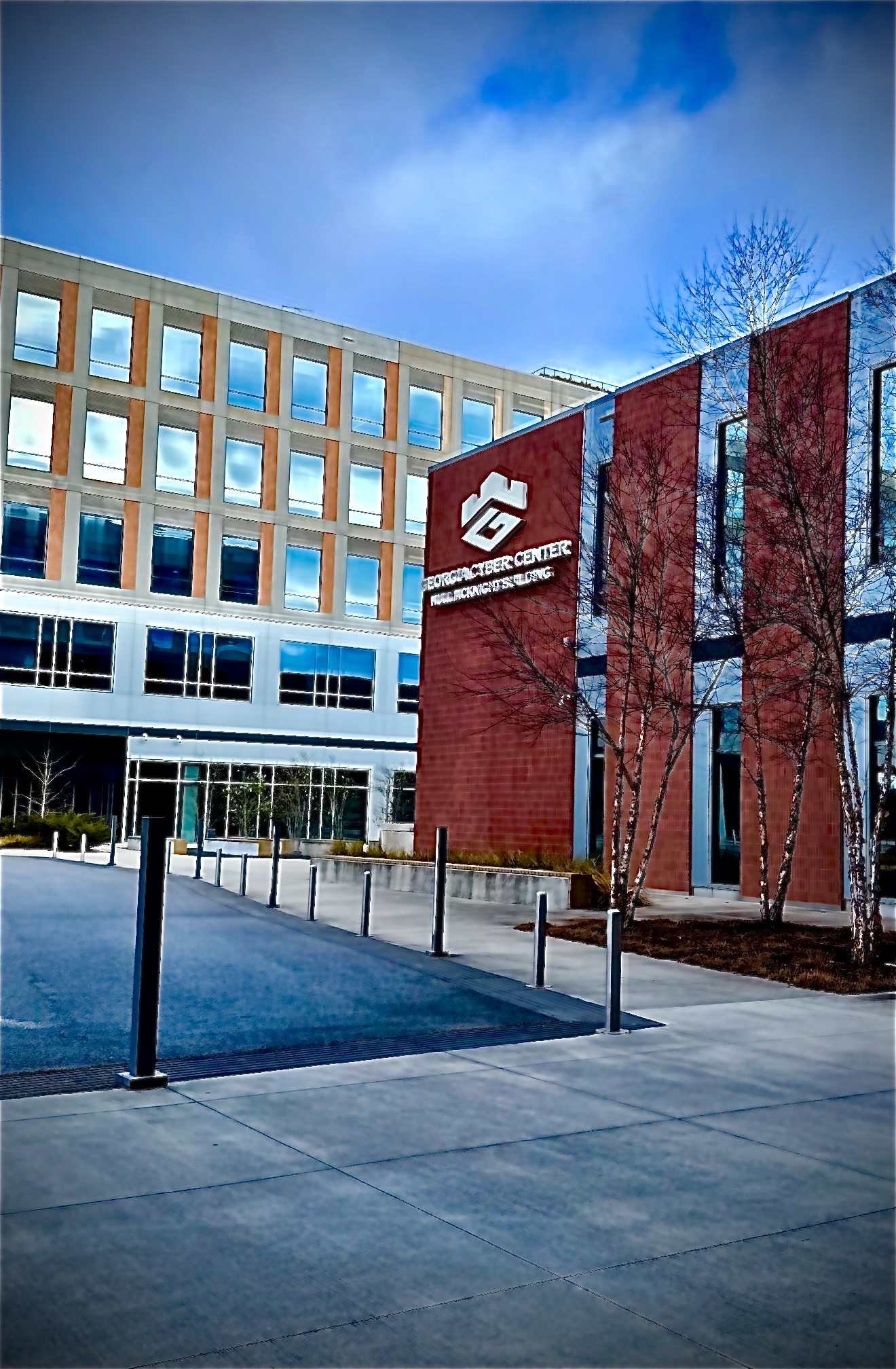
So when I saw Cyber Saturday in Augusta, Georgia, hosted by the National Cryptologic Foundation at the Georgia Cyber Innovation and Training Center, I didn't hesitate. I signed us up that same afternoon.
My kid asked what it was about. I said hacking. But the good kind.
That answer didn't fully land, but the look on their face when we walked through those doors absolutely did.
The Georgia Cyber Innovation and Training Center is not a typical government building. There's no sterile lobby and fluorescent hum of a facility built to process people and not much else. The space feels alive. Purpose-built. Like it was designed by people who actually understood what they were trying to accomplish. There is weight to it. The kind of weight that comes from buildings where real work gets done.
Cyber Saturday fills that space with kids from roughly fifth grade through tenth. Parents hover at the edges, equal parts curious and slightly lost. The energy in the room is not what you would expect from a government-sponsored cybersecurity event. It's closer to what you feel at a science fair where every project actually matters and nobody is going through the motions.
Tables are set up with hands-on challenges. A Capture the Flag runs throughout the event, not a watered-down version but a real CTF with actual flags to find, puzzles that require actual logic, systems that push back. There are escape room style challenges built around cyber problems where kids work through scenarios together, talking, arguing, trying things that don't work and then trying something else. Professionals from organizations like Booz Allen Hamilton are on the floor, not standing at booths waiting to hand out swag, but actually sitting with kids, talking through problems, letting them fail and try again.
It looked like mentorship. Real mentorship. Not a panel. Not a keynote. A conversation.
I watched my kid sit down at one of the stations and not move for forty minutes.
Not because someone told them to. Not because there was a test grade attached. Because the problem was interesting and they wanted to solve it.
I've explained what I do for a living more times than I can count. The technical parts land well enough with people inside the field. But the why, the stakes, the reason this matters beyond job titles and certifications, that part is harder to transfer. You can't explain it from the outside in. You have to feel it from the inside.
In that room, my kid felt it.
There was a moment when they figured something out. Some small logical puzzle that unlocked the next step in the challenge. They looked up with an expression I don't have a clean word for. It wasn't pride exactly. It was recognition. Like something that had been abstract became tangible, and they realized they were capable of operating in that space.
I've spent years building that capacity in myself through real work, real failures, real consequences. I watched it spark in them in under an hour.
This is how you build the next generation of defenders. Not through mandatory awareness training that nobody reads. Not through filtered curriculum designed by committee. Through hands-on problems that respect the intelligence of the person trying to solve them, and that make the work feel like something worth doing.
The National Cryptologic Foundation understands this. The team at the Georgia Cyber Innovation and Training Center understands this. The professionals who show up to events like this, many of them connected to organizations like Booz Allen Hamilton and others embedded in the broader cyber defense ecosystem, understand this. They gave up a Saturday to sit with a room full of kids who have no idea yet what they're capable of. That is not a small thing.
Cybersecurity is not just tools. It is people. Always people. The best tool in any defense stack is a human being who knows how to think under pressure and who has been taught to stay curious instead of defaulting to fear.
There is a version of this problem that keeps me up some nights.
The threats we face are real, persistent, and increasingly sophisticated. State actors. Criminal networks. Insider risks. Supply chain compromises. The attack surface expands every year while the workforce qualified to defend it does not grow fast enough to keep pace. The deficit is not technical in origin. It is human. We do not have enough people who understand this domain at the depth needed to operate in it effectively.
Those people don't appear from nowhere. They have to be developed. Deliberately. Early. Before the field intimidates them into choosing something else. Before they decide technology is something that happens to them rather than something they can shape.
Exposure beats restriction every time. I've watched parents try to limit their kids' access to technology out of worry about what they might encounter. That instinct comes from a real place and I understand it. But restricting access doesn't build defense. It builds ignorance. And ignorance is exactly what attackers exploit.
A kid who knows how systems work, who has thought about how locks are picked even hypothetically, who has sat down at a CTF and experienced the feeling of finding a flag, that kid is harder to manipulate, harder to deceive, and far more likely to end up on the right side of this fight instead of becoming an unintended entry point for someone with worse intentions.
Curiosity is the strongest defense mechanism we have. Not firewalls. Not endpoint detection. Curiosity. The person who asks how something works before assuming it's safe. The person who checks before they click. The person who questions before they trust. Events like Cyber Saturday build that muscle. Not by lecturing kids about what they shouldn't do, but by showing them what they can.
Driving home, my kid was quiet for a few miles. Then they asked me if you could actually get paid to do CTF stuff for real work.
I told them yes. I told them that's part of what I do.
They didn't say anything else, but I could see them thinking about it. Running the calculation. Mapping what they'd experienced that day onto something that might be possible. That's the whole game. That's what events like this are actually doing beneath the surface. It's not just a Saturday. It's a seed planted in the right soil at the right time.
The Georgia Cyber Innovation and Training Center, the National Cryptologic Foundation, the professionals who showed up to mentor kids and make the work feel approachable, they are doing something that matters beyond any metric you can put in a report. They are shaping what this field looks like in ten years. In twenty. They are building the workforce that will defend infrastructure none of us have built yet against threats none of us have fully imagined.
The threats we face today will not look like the threats we face in 2036. But the people who stop them will have been in rooms like that one in Augusta. Learning how to think under pressure. Learning how to look at a problem and stay in it until something breaks open.
My kid was one of those people on a Saturday in March.
I drove home with a lot of things settled that had been unsettled for a while.
We need more of this. Everywhere. More events. More access. More professionals willing to show up and sit down next to a kid who doesn't yet know what they're capable of. More space for curiosity to become competence before the complexity of this field scares people away. More investment in the human layer of national defense, because that is what this is. Not a field trip. Not a fun activity. A long-term investment in the only sustainable answer to the threats we face.
The future of cybersecurity is being built right now in rooms like the one we left that afternoon. Not in boardrooms. Not in budget cycles. In Capture the Flag challenges that a twelve-year-old solves and then looks up with that expression I still don't have a word for.
Protect that. Fund that. Show up for that.
We need more of it, and we need it everywhere.